For decades, leaders have been taught to treat change like a project. Announce it, build a rollout plan, train everyone, wait for the dust to settle and get back to normal.
There's just one problem. Normal isn't coming back.
New technology lands every quarter. AI is rewriting how work gets done in real time. Customers expect more, faster. Competitors make their next move before you finish the slide deck explaining your last one. When you look honestly at change management vs adaptability, the answer is clear: managing change was built for a world that no longer exists. Building a team that can adapt is how you win in the one we live in now.
The change isn't the variable. The ability to adapt is. - Nathan Jamail
Change Management vs Adaptability: What's the Real Difference?
Traditional change management assumes change is an event. It has a start date, a launch plan, a communication cascade and an end date. The goal is to get people from Point A to Point B with as little disruption as possible.
Adaptability assumes change is the environment. There is no Point B. There's just the next shift, and the one after that.
That difference sounds small. It isn't.
When leaders treat change as an event, they train their teams to wait. Wait for the announcement. Wait for the training. Wait for someone to explain the new process. Then wait for things to calm down.
When leaders build adaptability, they train their teams to move. To read the situation, adjust and execute without needing a six-week rollout every time something shifts.
Here's the uncomfortable truth: most teams aren't resisting change because they're stubborn. They're exhausted from being managed through it. Gartner research found that the share of employees willing to change their work behaviors to support organizational change dropped from 74% in 2016 to just 38% in 2022. That's not a communication problem. That's a model problem.
You can't run a project plan on something that never ends.
Why Change Management Is No Longer Enough
Change management isn't wrong. It's incomplete. It was designed for a world where a company went through one major transformation every few years. A new system. A merger. A reorg.
Today, that pace looks quaint. In a single year, one team might face new tools, AI changing how tasks get done, shifting customer expectations, budget cuts, new leadership and new competitors. If every one of those gets treated as a formal change initiative, your team spends more time being managed than actually performing.
Three problems show up when leaders rely on change management alone:
It's leader-dependent. The plan lives at the top, so the team only moves when leadership pushes. That creates bottlenecks everywhere.
It chases buy-in. Leaders spend months trying to get everyone to agree. Agreement is slow, and the market won't wait for consensus.
It ends. The project closes, the consultants leave and the team slides back into old habits, because nothing about their mindset changed. Only their instructions did.
The competitive advantage isn't having the best change plan. It's having the team that adapts and executes faster than everyone else.
Belief Moves Faster Than Buy-In
This is where most leaders get stuck; they think their job during change is to sell it. Present the case, answer every objection and keep going until everyone nods.
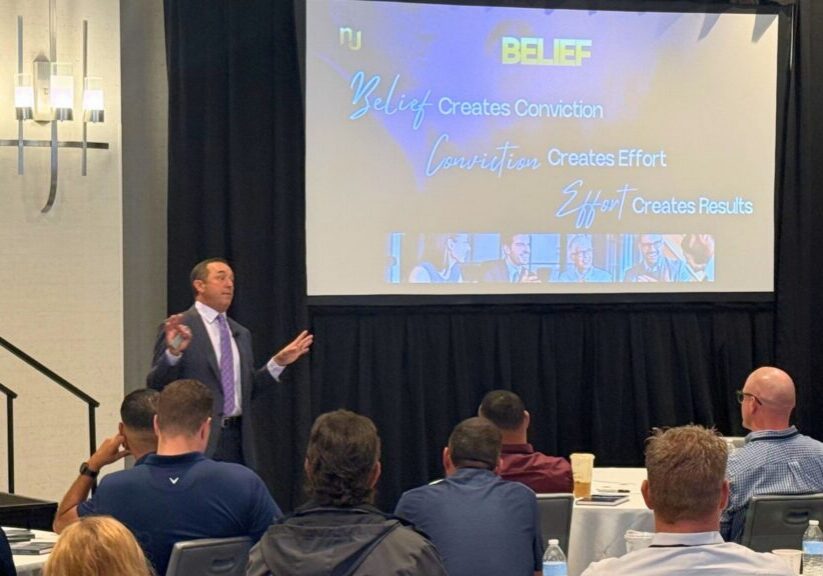
My challenge to that: belief moves faster than buy-in.
Buy-in is agreement with a specific decision. Belief is confidence in the direction, the leader and the team's ability to figure it out. Buy-in has to be re-earned every time the plan changes. Belief carries over.
A team that believes doesn't need to be convinced every time something shifts. They trust that their leader is being straight with them, they understand the why and they're confident they can handle what comes next.
So how do you build belief instead of chasing buy-in?
Be transparent early. Transparency comes before trust. Tell your team what you know, what you don't know and what you're deciding. People handle uncertainty far better than they handle being surprised.
Connect the change to the standard, not the trend. "We're adopting this because we hold ourselves to a higher standard of serving customers" lands very differently than "corporate says we have to."
Mandate what matters. Mandatory doesn't mean controlling. Great leaders are clear about the few things that are non-negotiable and give their people room to figure out the rest.
Your team doesn't need another change initiative. They need a leader they believe in and the skills to adapt. - Nathan Jamail
How to Build a Team That Adapts Instead of Waits
Adaptability isn't a personality trait some people are born with. It's a skill. And like any skill, it gets built through practice and coaching. Here's what leaders who build adaptable teams actually do differently:
1. Coach adaptability. Don't just announce change. When something shifts, don't send a memo and move on. Sit down with your people and ask: What does this change for you? What's the first thing you'll do differently? Where do you think you'll get stuck? Great leaders coach people instead of simply managing performance, and that matters most when the ground is moving.
2. Practice before it's real. Elite teams don't wait for game day to practice. Run scenarios: If our biggest client changed their requirements tomorrow, what would we do? Teams that rehearse adjusting get faster at it when it counts.
3. Get clearer when the plan gets less certain. Clear expectations are good leadership. When the how is changing, be even clearer about the what. Which results still matter? Which standards don't move? Clarity on the outcome gives people freedom on the path.
4. Hold people accountable for adapting. Adapting is part of the job, not an optional bonus. Accountability creates ownership. When leaders expect people to adjust and actually follow up, teams stop waiting for permission and start owning the result.
5. Check your calendar. Want to know what a leader truly values? Look at their calendar and see how much time they spend developing people. If your week is full of meetings about the change and empty of time coaching the people living through it, you've found the problem.
Adaptability in the Age of AI
AI is the clearest example of why change management alone can't keep up. The tools will keep changing. What works today will be replaced, upgraded or rebuilt within months. No rollout plan survives that pace.
But here's what AI doesn't change: someone still has to lead. AI can replace or accelerate a lot of knowledge-based work, but it can't build trust, create conviction or make a team believe they can handle what's next. That's still a human job. That's a leader's job.
Culture determines whether teams succeed, even as technology changes. The organizations that thrive won't be the ones with the best AI rollout plan. They'll be the ones whose people know how to adapt, trust their leaders and execute. That's the heart of Build to Win™: the mindset and practices that empower leaders and teams to raise the standard. Not a one-time initiative. A way of operating.
Stop Managing Change. Start Building Adaptability.
Change management asks, "How do we get through this?" Adaptability asks, "How do we get better at getting through anything?"
That shift is the difference between teams that survive change and teams that win because of it.
So the next time something big shifts in your organization, resist the urge to build another rollout plan first. Ask a better question: Is my team built to adapt? If the answer is no, that's the real work. And it starts with you.
Frequently Asked Questions
What is the difference between change management and adaptability?
Change management treats change as a one-time event with a beginning, a rollout and an end. Adaptability treats change as constant and focuses on building a team's ability to adjust and execute on its own. Change management moves people through a specific change. Adaptability prepares them for every change that comes next.
Is change management still useful?
Yes, for large, defined projects like a system migration or a merger, a structured plan still helps. The problem is relying on it as your only approach. When change is constant, a team that depends on formal change initiatives will always be a step behind a team that knows how to adapt.
How can leaders build adaptability in their teams?
Coach people through change instead of just announcing it, practice scenarios before they happen, set clear expectations on outcomes even when the process is shifting and hold people accountable for adapting. Most importantly, leaders have to put time on their calendar to develop their people, not just manage the change.
Why do employees resist change?
Most employees aren't resisting change itself. They're worn out from being managed through one initiative after another, often without transparency or a clear why. When leaders are open about what they know, connect change to a standard the team believes in and build belief instead of chasing buy-in, resistance drops.
How does AI affect the need for adaptability?
AI speeds up the pace of change, which makes adaptability more important than ever. Tools will keep evolving, but AI can't replace trust, conviction or a leader's ability to make people believe. The teams that thrive will be the ones with strong leadership and culture, not just the newest technology.
Ready to Build a Team That Adapts and Executes?
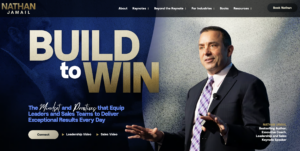
Change isn't slowing down, and your team can't afford to wait for the next rollout plan. Nathan Jamail's Build to Win™ keynote gives leaders and teams the mindset and practices to adapt, execute and raise the standard, no matter what changes next.
Learn more about Build to Win: https://nathanjamail.com/keynotes/build-to-win/
w tab)

Nathan Jamail
Keynote Speaker on Leadership, Human Performance & Building Winning Teams | CEO | Bestselling Author
Nathan Jamail is a record-setting business leader, CEO, bestselling author, and award-winning Adjunct Professor at SMU’s Cox School of Business. Drawing on decades of real-world leadership experience, Nathan helps organizations build winning teams through stronger leadership, accountability, trust, and human connection - developing the skills and culture that technology simply cannot replace. Learn more about Nathan here.