Ask most managers what accountability means and watch their shoulders tighten. They picture a write-up. A tense meeting. A conversation they've been putting off for three weeks.
That's the problem. Somewhere along the way, we started treating accountability like a consequence instead of a commitment.
Accountability in leadership isn't punishment. It's one of the clearest ways a leader can tell someone, "You matter here. Your work matters. And I believe you're capable of more."
When you let someone slide, you're not being kind. You're sending a message that what they do doesn't really count. People feel that, even if nobody says it out loud.
Why We Get Accountability in Leadership Wrong
Most leaders avoid accountability for one reason: they think it will damage the relationship.
So they soften the message. They wait for the annual review. They hint instead of saying it straight. They fix the work themselves at 9 p.m. on a Tuesday rather than have a five-minute conversation.
None of that protects the relationship. It erodes it.
Think about what avoidance actually communicates. If I never hold you to the standard, I'm either telling you I don't think you can hit it, or I'm telling you I don't care whether you do. Neither one makes you feel valued.
Meanwhile, the high performers on your team are watching. They see the standard slipping, and they start wondering why they're working so hard. Avoidance doesn't only hurt the person you're avoiding. It punishes everyone who's doing it right.
Your people don't need a nicer boss. They need a clearer leader. - Nathan Jamail
Accountability Creates Ownership, Not Fear
Here's where most leaders have it backward: accountability isn't something you do to people. It's something you build with them.
When accountability is done well, people don't feel watched. They feel trusted. They know what's expected, they know someone is paying attention, and they know their effort will be noticed. That's what creates ownership.
The research backs this up. Gallup found that employees who strongly agree their manager holds them accountable for their performance are 2.5 times more likely to be engaged in their job. Accountability isn't a morale killer. Done right, it's a morale builder.
The difference is intent. Punishment looks backward and asks, "Who messed up?" Accountability looks forward and asks, "What's the standard, and how do we get there together?"
This is at the heart of Build to Win™ - the mindset and practices that empower leaders and teams to raise the standard. And you can't raise a standard you won't hold.
Clear Expectations Are Good Leadership
You can't hold someone accountable to an expectation they never knew existed.
A lot of what leaders call performance problems are actually clarity problems. The employee thought "done" meant one thing. The leader meant something else. Nobody said it out loud, and now there's frustration on both sides.
Before you have the accountability conversation, ask yourself three questions:
- Did I clearly define what success looks like, including the deadline and the quality bar?
- Did they confirm they understood it, in their own words?
- Did I check in along the way, or did I wait until it was too late?
If the answer to any of those is no, start there. The conversation will go far better when it's built on clarity instead of assumptions.
And remember: mandatory doesn't mean controlling. Leaders mandate what is important. If a standard truly matters, say so plainly and stand behind it.
How to Hold Employees Accountable Without Damaging the Relationship
Accountability doesn't have to be awkward. It has to be consistent. Here's what that looks like in practice:
- Make it normal, not a big event. If the only time you talk about performance is when something goes wrong, every check-in feels like a trial. Regular one-on-ones turn accountability into a routine instead of a crisis.
- Lead with belief. Start with why you're having the conversation: "I'm bringing this up because I know what you're capable of." Belief moves faster than buy-in. When people believe you're in their corner, they listen differently.
- Be specific. "You need to step it up" isn't feedback. "The last two reports came in a day late, and the client noticed" is something a person can act on.
- Ask before you tell. "What got in the way?" often uncovers a roadblock you can help remove. That's coaching, not managing.
- Agree on the next step and follow up. Accountability without follow-up is just a speech. Put the next check-in on the calendar before the meeting ends.
Speaking of calendars: want to know what a leader truly values? Look at how much time they spend developing their people. If accountability conversations never make it onto yours, that tells your team something too.
Accountability Is How You Show People They Matter

Think about the coach, teacher or boss who made the biggest difference in your life. Odds are, they didn't let you off the hook. They expected more from you than you expected from yourself, and they wouldn't let you settle.
That didn't feel like punishment. It felt like someone finally took you seriously.
That's what your team needs from you. Leaders create significance by making their people feel significant, and few things do that better than a leader who says, "This matters, you matter, and I'm not going to let you be less than you are."
Even as AI takes over more routine work, this doesn't change. Technology can track output and flag a missed deadline. It can't look someone in the eye, believe in them and hold them to a higher standard. That's the leader's job, and it's becoming more important, not less.
Stop thinking of accountability as the hard part of leadership. It's the part that proves you care. - Nathan Jamail
Frequently Asked Questions
What is accountability in leadership?
Accountability in leadership means setting clear expectations, consistently following up on them and helping people own their results. It's not about blame. It's about creating a standard people can rise to and making sure they know someone is invested in their success.
How do you hold employees accountable without micromanaging?
Micromanaging is controlling how every task gets done. Accountability is being clear on the outcome and checking in through regular coaching conversations. Consistent one-on-ones make follow-up feel normal instead of intrusive.
Why do leaders avoid accountability conversations?
Most leaders worry the conversation will hurt the relationship or create conflict. In reality, avoidance does more damage. It signals that the work doesn't matter and frustrates the team members who are meeting the standard.
What's the difference between accountability and punishment?
Punishment focuses on the past and on consequences. Accountability focuses on the future and on the standard. One asks "Who's at fault?" The other asks "What do we need to do to get this right?"
How do clear expectations improve accountability?
You can't hold someone to a standard they never understood. When success, deadlines and the quality bar are clearly defined, the leader and employee share the same reference point. That makes accountability fair and far less personal.
Ready to Raise the Standard?

Build to Win™
The mindset and practices that empower leaders and teams to raise the standard.
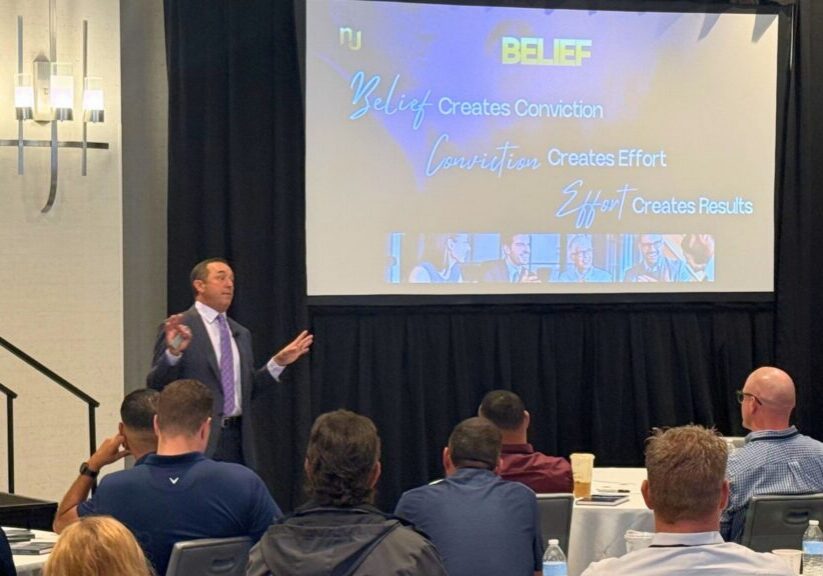
Accountability isn't a tactic. It's a culture. Nathan Jamail's Build to Win™ keynote gives leaders and teams the mindset and practices to set clear expectations, create ownership and build cultures where people know they matter.
Learn more about the Build to Win™ keynote
w ab)

Nathan Jamail
Keynote Speaker on Leadership, Human Performance & Building Winning Teams | CEO | Bestselling Author
Nathan Jamail is a record-setting business leader, CEO, bestselling author, and award-winning Adjunct Professor at SMU’s Cox School of Business. Drawing on decades of real-world leadership experience, Nathan helps organizations build winning teams through stronger leadership, accountability, trust, and human connection - developing the skills and culture that technology simply cannot replace. Learn more about Nathan here.