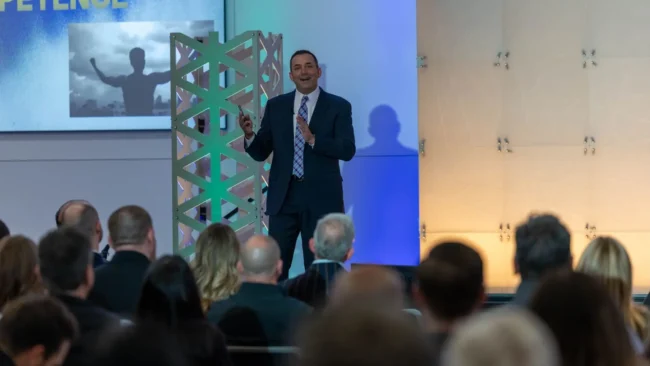
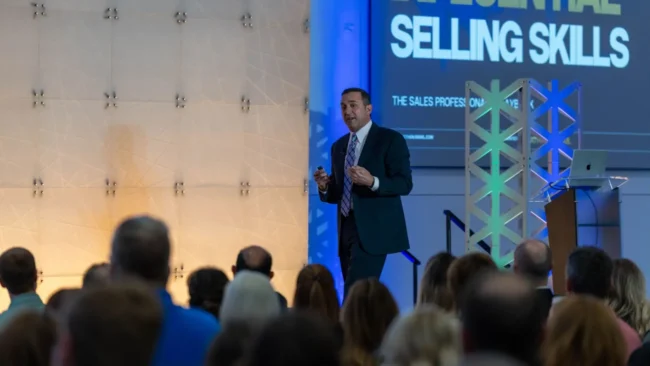
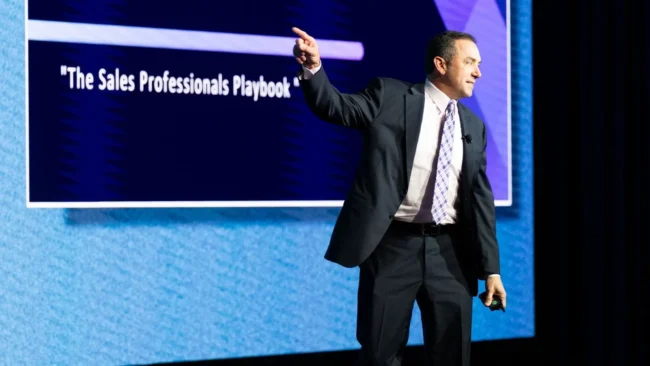
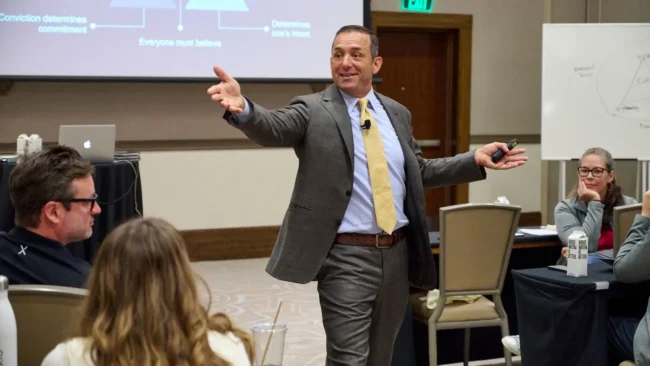
Nathan Jamail is a keynote speaker and bestselling author of 5 books, including his most recent “Serve Up & Coach Down.” With over 25 years of leadership in Corporate America as a top Director of Sales and a small business owner of several companies, his clients have come to know him as “The Real Deal.” Nathan has taught great leaders from across the world and shows organizations how to have a “Serve Up Mindset” to achieve maximum success. His expertise doesn’t come just from research or interviews. It’s from living the life of leadership for over 25 years. As a sales leadership keynote speaker and author who works with thousands every year, he challenges leaders to be the best version of themselves and settle for nothing less! Check out Nathan Jamail’s books, articles, keynote presentations, and blogs at
NathanJamail.com or follow us on
LinkedIn,
Facebook or
Twitter.
You’ve sat through it. The lights dim, the music swells, and a speaker with a great bio and zero connection to sales walks out and tells your team to “dream bigger.” Ten minutes in, phones come out. That’s the risk every time you book a speaker without knowing what you’re actually buying. If you’re responsible for finding a sales leader keynote speaker for your next kickoff, conference, or retreat, the stakes are higher than picking a good talker. You need someone who has actually run a sales team, made the number, missed the number, and knows the difference between motivation and noise. Here’s how to pick one your team will still be talking about next quarter.
The first quarter of every year, sales leaders spend a small fortune flying their team to a hotel ballroom, feeding them rubber chicken, and hoping three days of hype will carry the whole year. It rarely does. I have been the guy on stage at dozens of these kickoffs, and I can tell you the difference between an SKO (sales kick off meeting) people forget by February and one that actually changes how a team sells has almost nothing to do with the band you hired or the confetti cannon. As a sales leader keynote speaker, I get called in after leadership already knows something is broken. Usually it is this: the meeting was fun, but nothing changed.
Every sales leader keynote speaker gets asked the same question after a keynote: “How do I keep my team motivated?” I get it. But I am going to give you an answer nobody wants to hear on the drive home: stop chasing team motivation. It is the wrong goal, and it has been setting leaders up to fail for years.
Motivation is a mood. Moods change with the weather, the deal that fell through, the traffic on the way to the office, and whatever happened at home last night. If your sales results depend on your team feeling motivated, you have built your business on a foundation that shifts every single day.
What you actually need is commitment. Commitment does not care how anyone feels on a Tuesday morning. Let us talk about the difference, and why it changes everything.
Ask any sales leader keynote speaker what kills a sales team from the inside, and mediocrity will be near the top of the list every single time. Not a bad economy. Not a tough quarter. Mediocrity – the slow, mostly quiet acceptance of “good enough” – because it is comfortable and confrontation is not.
Here is the problem usually: mediocrity does not announce itself. It does not show up in a headline or blow up your pipeline overnight. It shows up as the rep who has missed quota six months running but still has a seat at the table. It shows up as the manager who lets “I did my best” pass as an answer. And little by little, it becomes the new normal.
I have spent years on stages and in sales huddles telling leaders a hard truth they don’t want to hear: what you tolerate, you promote. Let us talk about what mediocrity is actually costing you, and what to do about it.
Ask ten managers if their team knows what’s expected of them, and nine will say yes. Ask their team the same question, and you’ll get a different answer. That gap is why I spend so much time on stages talking to sales leaders about the basics, because the basics are the part everyone skips.
I’ve built a career as a sales leader keynote speaker because companies keep hitting the same wall: leaders who are smart, hardworking, and still can’t get their teams to perform. Nine times out of ten, it’s not a talent problem. It’s an expectations problem. Nobody sat down and said, out loud, in plain language, here’s what winning looks like on this team.
You hired a sales leader keynote speaker. The room was electric. People laughed, leaned in, took notes, and a few of your toughest reps actually got a little misty during the part about leading with belief. Monday morning, the team is fired up. By Friday, they are right back to the same habits, the same excuses, and the same average numbers.
Welcome to the post-keynote problem. It is the dirty little secret of the speaking industry, and almost nobody talks about it. The talk is great. The afterglow is real. And then regular life walks back in, kicks its boots off, and takes over the couch.
Here’s what most folks do not want to hear: a keynote was never designed to change behavior on its own. It was designed to open a door. What you do after everyone goes home is what decides whether anything actually changes.
I bet you didn’t know that your top performer probably checked out weeks ago, and you missed it because they still hit their number. They still show up. They still close. And that is exactly why you did not notice. As a sales leader keynote speaker, I have stood in front of thousands of leaders who swear their best people are fine, right up until the resignation email lands and the whole team feels the floor drop.
Quiet quitting in sales does not look like slacking off. It looks like a great rep doing the bare minimum to stay great. They stop raising their hand in meetings. They stop pushing for the stretch deal. They coast on relationships they built two years ago. The talent is still there. The hunger left the building. And if you are only watching the scoreboard, you will be the last to know.
Somewhere along the way, leaders got handed a bad piece of advice: if you want to stop micromanaging, just back off. Give people space. Stay out of their way. It sounds noble. It also happens to be one of the fastest ways to watch a good team drift into mediocrity.
I have spent years on stage as a sales leadership keynote speaker, and the room always laughs nervously at this part, because almost every manager has been told that being involved makes them a micromanager. So they retreat. They go quiet. And then they wonder why their best people stop hitting their numbers and start updating their resumes.
Here is the truth nobody wants to say out loud: the opposite of micromanaging is not absence. It is coaching.
You’ve got a budget, a ballroom, and a lot of people who would honestly rather be checking email. The single decision that makes or breaks your event is who you put on that stage. Choosing the right sales leadership keynote speaker for your industry conference isn’t about finding the loudest voice or the longest resume. It’s about finding someone who can walk your people out of that room ready to do something different on Monday morning.
I’ve spoken at hundreds of conferences and sat in the audience for plenty more. I’ve watched great events get flattened by the wrong keynote, and I’ve watched average agendas get rescued by the right one. So if you’re an event planner trying to figure out how to pick the right keynote speaker for your conference without rolling the dice, here’s exactly how I’d do it.
So you’re planning a sales event. Maybe it’s a national sales meeting, a kickoff, or a leadership summit. Someone at the table says, “We should get a speaker.” Great idea. Then comes the question nobody wants to admit they don’t know the answer to: what kind of speaker do you actually need?
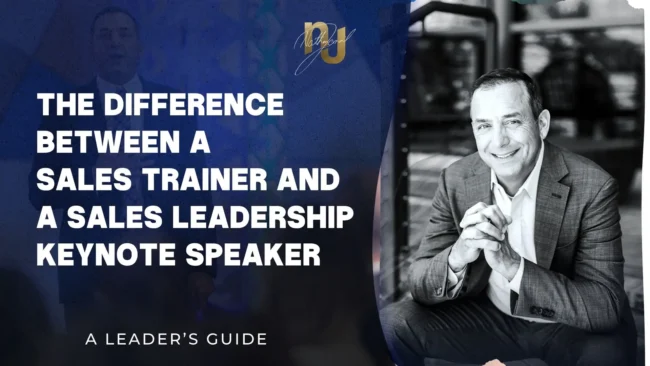
If your team needs to learn how to cold call better, handle objections, or use a specific sales methodology – that’s a training job. But if your leadership team needs to think differently, lead differently, and build a culture that actually performs? That’s a different conversation entirely. That’s where a sales leadership keynote speaker comes in.
These two things are not the same. Booking the wrong one is an expensive mistake – not just in dollars, but in impact. Let’s break it down.